Two Chinese tourists and two Thai suspects arrested in illegal migrant smuggling crackdown
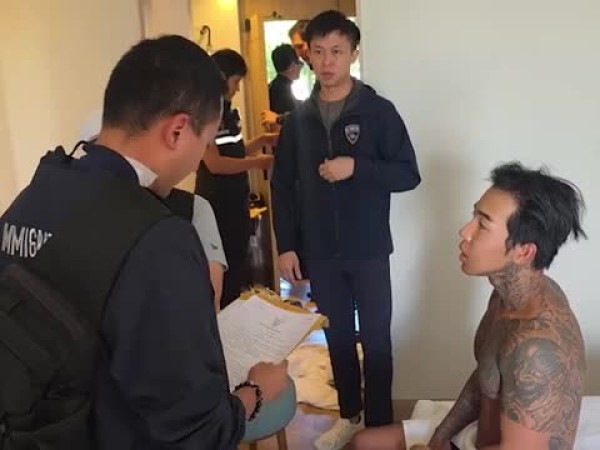
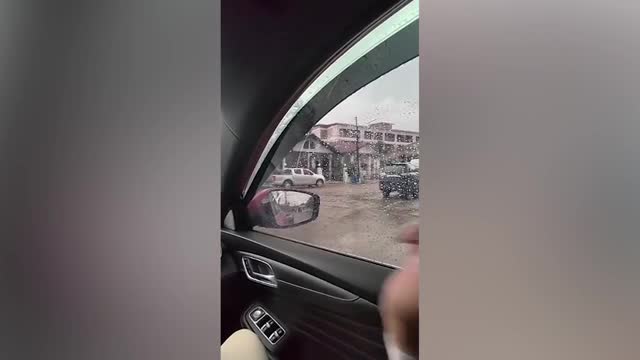
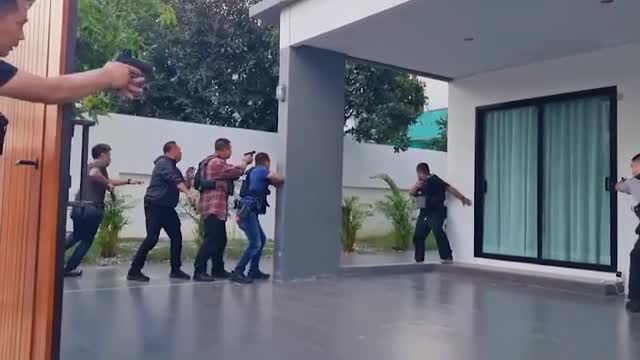
Two Chinese tourists and two Thai suspects were arrested in an illegal migrant smuggling crackdown in Thailand.
The Chinese men were believed to have entered Thailand while fleeing scam compound raids in neighbouring Cambodia.
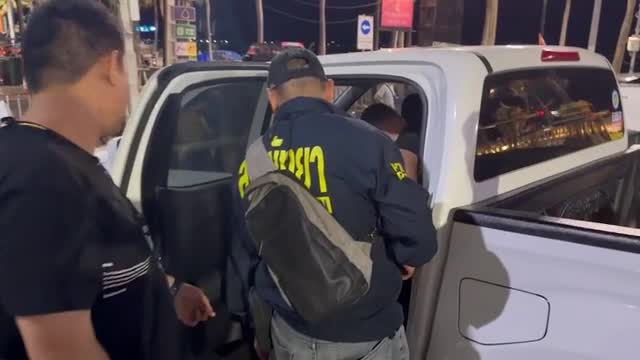
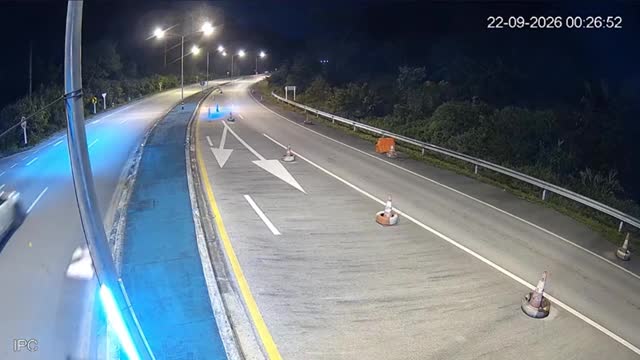
They allegedly hired a criminal network to smuggle them across the border before highway police intercepted their cars at a petrol station in Chonburi, on September 24.
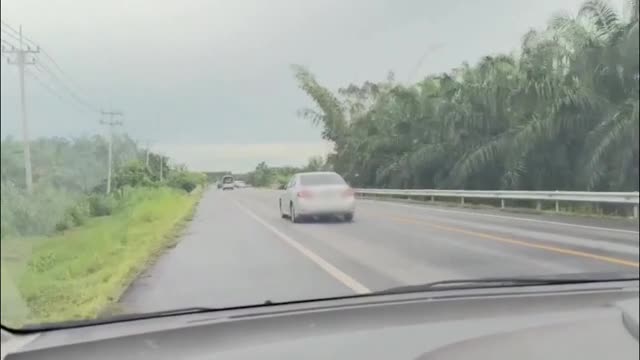
Officers first stopped a grey Toyota Corolla Altis driven by Thai driver Pitak, 51. Inside were Chinese nationals Wu Xuefeng, 27, and Huang Liang Hu, 29, who allegedly could not produce passports or immigration documents.
A second grey Toyota Fortuner was parked nearby with Thai woman Suphannee, 45, inside.
Police said the Fortuner had been travelling as a scout vehicle, monitoring the route ahead while the Corolla carried the two Chinese nationals.
The driver, identified as Wittaya, reportedly fled while officers were inspecting the first vehicle. He was said to be a repeat offender who was previously arrested for a similar smuggling offence on August 28.
Police said the Thai suspects were charged with assisting foreign nationals who had entered Thailand illegally to evade arrest, while the Chinese men were charged with illegal entry and overstaying in the country.
Officers seized the two vehicles and seven mobile phones during the operation.
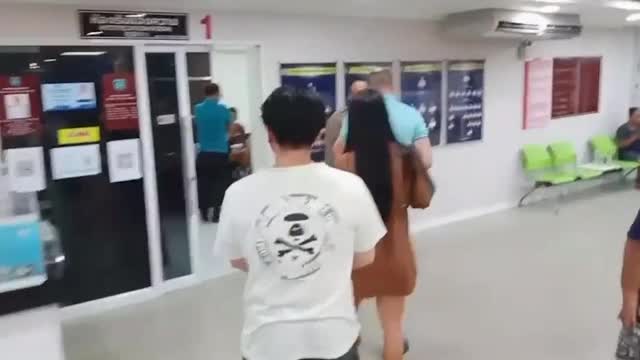
All four suspects were handed over to the Bo Thong Police Station.
Police Major General Pornsak Laorujiralai, commander of the Highway Police Division, said the arrests were part of the ‘Ghost Drivers' operation targeting a human smuggling network allegedly transporting illegal Chinese nationals through Thailand.
Twenty-six people were previously arrested in the crackdown.
Following those arrests, investigators continued monitoring vehicles linked to the network and found that smugglers had changed tactics.
The highway police chief said: 'We found that the network had stopped using the main highways and instead took quieter secondary roads, where there was less traffic and fewer checkpoints.
'They were using these routes to move people from the Pong Nam Ron border area in Chanthaburi to Bangkok and nearby areas.'
He added that the suspects were being more vigilant, using a scout vehicle to monitor for checkpoints on the route ahead. The drivers allegedly communicated constantly through a messaging application and were instructed to delete their conversations after each trip.
Thai driver Phithak told police he had been paid 2,000 baht for each Chinese passenger he took to Bangkok and had carried out similar jobs around ten times.
While Suphan and Witthaya allegedly worked as scouts and were paid 2,500 baht for each trip.
The two Chinese nationals allegedly confessed they had crossed into Thailand on foot through a natural border crossing in Chanthaburi, on the morning of the arrests.
They claimed a Cambodian national had helped them across the border before handing them over to the smuggling network.
Both reportedly planned to use travel onwards to Myanmar and Malaysia, and paid 'several thousand dollars' for the journey.
Authorities said they were investigating the alleged employers, brokers and financiers behind the network, including possible links to organised transnational crime groups.
Crime gangs operate sprawling fraud and human trafficking networks across Thailand, Cambodia, Laos and Myanmar, with many bases hidden inside heavily guarded compounds in remote border areas.
The region forms the notorious Golden Triangle where the borders of Thailand, Laos and Myanmar meet around the Mekong River.
At the heart of the Golden Triangle lies the Golden Triangle Special Economic Zone (GTSEZ), run by notorious Chinese business tycoon and suspected crime boss Zhao Wei in the Chinese vassal state Laos. Communist chiefs are said to turn a Nelsonian eye to his wrongdoing.
In 2007, Zhao brokered a deal with the Laos government and obtained a 99-year lease to build the zone on a 39-square mile patch of impoverished Bokeo province.
The Chinese businessman claims to be a benefactor as he touts the GTSEZ as a tourist and economic hub designed to bring more income and investments into the country. However, both local and international law enforcement agencies believe it is a front for organised crime, including human trafficking, drug trafficking, and call-centre scams.
International authorities have struggled to take down the gambling empire as the Laos government itself is said to be protecting the GTSEZ, in which it has a 20 per cent stake.